Artificial intelligence is set to play a role in streamlining Seoul's emergency report systems in the event of large-scale disasters such as heavy rainfall, earthquakes or wildfires, Seoul's municipal government said Wednesday.
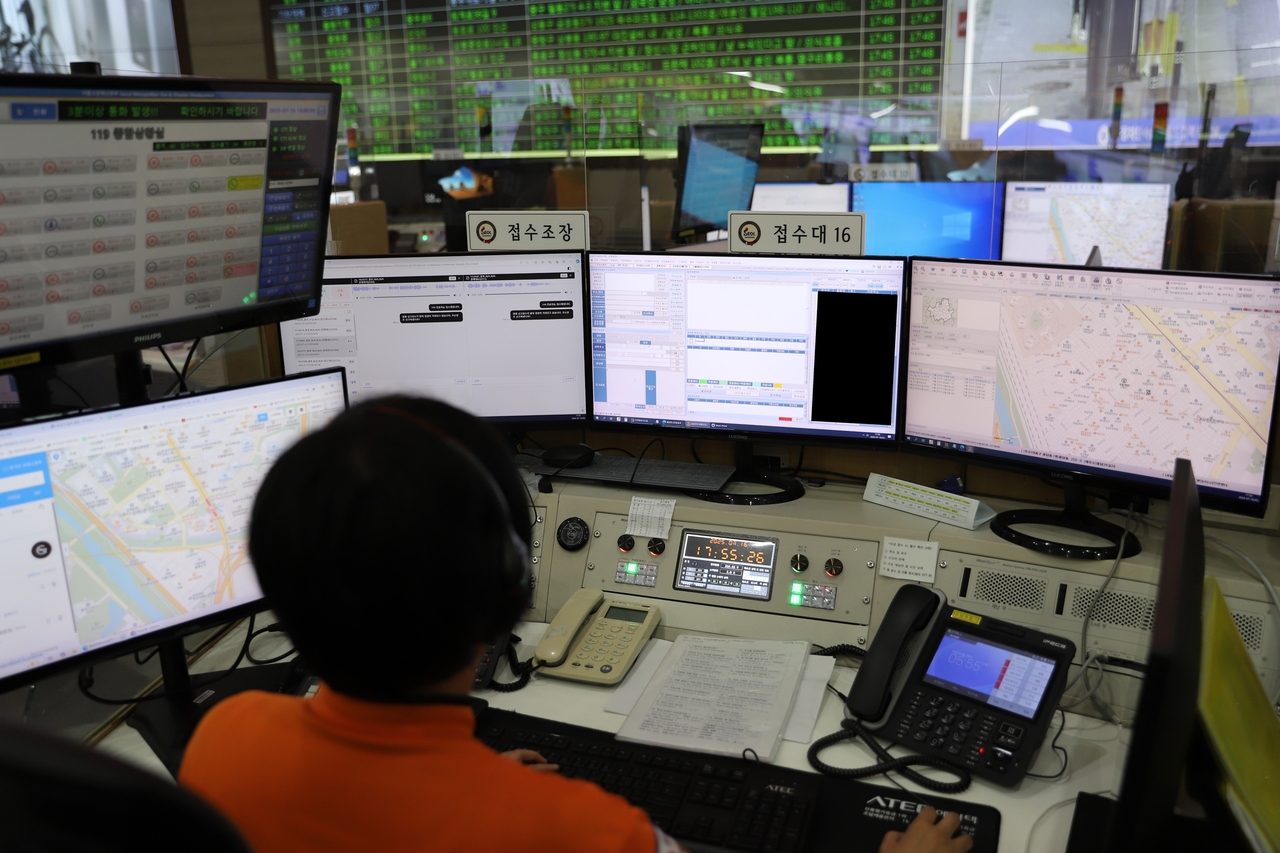
Seoul’s new 119 emergency system, applied during call surges, is South Korea's first AI-based emergency service. It has been under pilot operation since March.
The Seoul Metropolitan Government explained that the AI emergency call system boosts efficiency when handling a sudden surge in emergency call numbers, namely, when call traffic exceeds what the system can handle.
The new AI emergency service is designed to simultaneously manage 240 emergency calls, enabling faster initial response and increasing chances to secure critical time for those in urgent situations.
“The AI responder collects details about the type and location of the incident in real time. After reviewing the report, it forwards more urgent cases to human operators. When similar emergency calls come from the same area, the system also analyzes the risk of additional emergencies,” the city government official said in a press release Tuesday.
Given the importance of emergency reports, the city government initially implemented a dual-monitoring system with human staff ensuring the accuracy of AI responses in real time.
The AI-powered system can also receive multiple emergency reports simultaneously, categorize different cases, and prioritize specific reports that require urgent response or immediate measures from the human operators at the Seoul Emergency Operation Centers.
The Seoul Metropolitan Government plans to expand the original system to include an AI-based network that comprehensively monitors daily disasters, including road flooding and drainage problems, by the second half of 2026.
The city government also has its eyes set on AI systems for general administrative services, developing them from basic automation to abilities for decision-making and customer response.
“As AI has become a tool for protecting lives, it is essential to ensure both technological reliability and public trust. Seoul will continue to build a balanced institutional foundation and a public AI ecosystem to ensure that AI technologies operate safely for the people,” the city government official added.
sj_lee@heraldcorp.com