
Provisional findings suggest pilot may have mistakenly switched off wrong engine
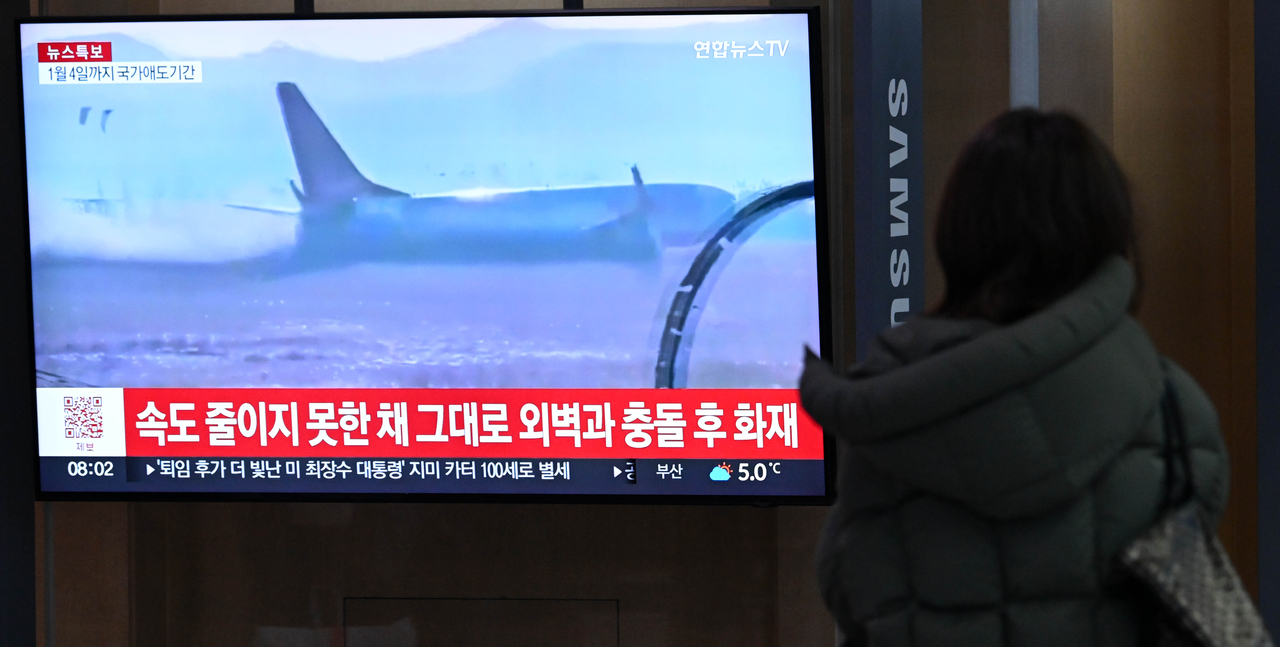
A recent government analysis suggests that the pilot involved in the fatal Jeju Air crash last December at Muan Airport in South Jeolla Province may have made a critical error by shutting down the left engine, which was intact, instead of the right engine damaged by a bird strike.
However, the preliminary findings have sparked an outcry from the victims’ families and the pilots’ labor union at Jeju Air. They argue that the report unfairly places blame on the pilot, who died in the crash, before the investigation is complete.
The Aviation and Railway Accident Investigation Board, under the Ministry of Land, Infrastructure and Transport, had planned to announce the interim results of its probe into the deadly crash of Jeju Air Flight 2216, which claimed the lives of 179 of the 181 passengers and crew onboard. But the announcement was canceled following a strong backlash from the bereaved families, who say the report overlooks other contributing factors.
According to preliminary findings, a bird strike caused severe damage to Flight 2216’s right engine. Despite this, the pilot reportedly shut down the left engine, which was undamaged.
If confirmed, this would indicate that pilot error contributed, at least in part, to the crash. The plane landed on its belly, without the landing gear deployed. It skidded off the runway, collided with an embanked structure and exploded in flames.
The investigation board told local media that shutting off the engine likely cut power to the system responsible for deploying the landing gear.
Report not final, but complaints over 'bias'
The conclusion of the ongoing investigation is expected by June 2026, when the final report will be made public. However, the bereaved families claim the investigative board was vague about the grounds for its preliminary findings, arguing that it unfairly implies that the main cause was human error.
They said the report does not cover other crucial factors suspected to have led to the tragedy, like a potential defect in the aircraft or the presence of the earthen berm supporting the localizers that the plane crashed into. The berm had concrete structures inside, which is suspected to have led to a more destructive impact, causing the explosion and fire that led to the high casualty rate.
One member of the family group said that when he asked the ARAIB about the integrated drive generator, a crucial unit inside the aircraft engine, the board said it was still under investigation.
Kim Yu-jin, the head of the bereaved families' group, urged the ARAIB to provide detailed explanations in the report and to provide additional materials for every point of controversy.

The full details of the report have not yet been made public, as a protest by victims' families during an unofficial briefing led to the cancellation of Saturday's planned press briefing.
The ARAIB has denied the accusations of bias, saying that its findings are based on inspections of the engines and the flight data recorder. It said an investigation into whether the airport berm exacerbated the tragedy is still ongoing, with the results due as soon as late August.
minsikyoon@heraldcorp.com