
Intense weekend heat approaches Korea as twin high-pressure systems loom
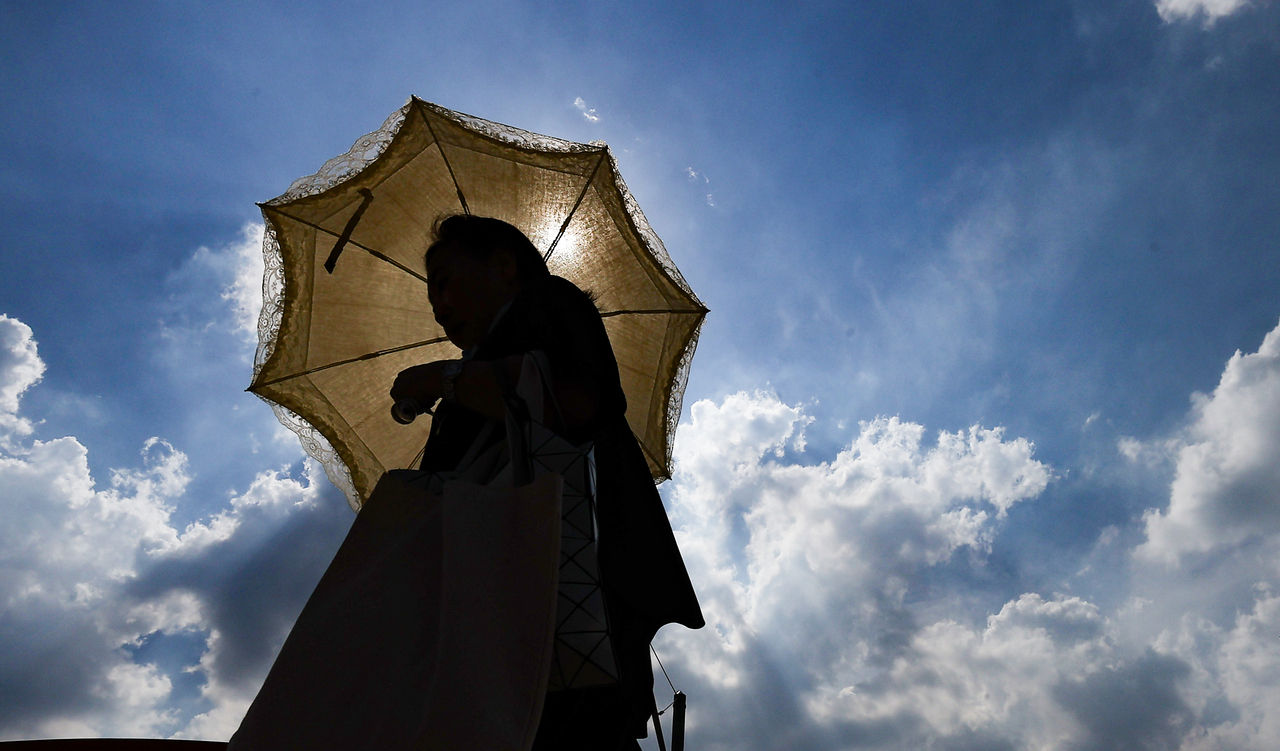
South Korea is on track to see one of its hottest summers in history, as forecasters warn that the heat will intensify over the weekend due to the combined influence of two high-pressure systems.
The Korea Meteorological Administration said Thursday that the country has already broken several summer weather records.
During a press briefing, the KMA stated that average daily temperatures from June 1 to Wednesday reached 24.5 degrees Celsius nationwide — the highest average temperature seen during that period since the statistic was first compiled in 1973.
The average daily high during the same period hit 29.5 C, also the highest on record.
Over the 52-day period, the country experienced an average of 10 days with heat waves, defined as days when the daily high exceeds 33 C, marking the third-highest figure ever recorded.
Following a week of torrential rain, heat wave warnings were issued again in most parts of the country as of 5 p.m. Thursday, as apparent temperatures ranged from 32 C to 37 C. In Korea, heat wave warnings are issued when the maximum apparent temperature is expected to remain above 35 C for two or more consecutive days.
The heat is expected to intensify from Friday and into the weekend. Highs in some regions on Friday are expected to reach 37 C, and on Saturday and Sunday, highs are expected to range between 32 C and 38 C.
According to forecasters, western parts of Korea, including the capital Seoul, are likely to see even hotter conditions due to warm southeasterly winds flowing into the country. The winds are expected to cause drier and hotter conditions in urban areas that are already warm due to strong sunlight and densely packed infrastructure.
Nighttime temperatures have also been unusually high. Average nighttime lows between June 1 to July 23 were recorded at 20.6 C, the second-highest since weather records were first kept. The number of tropical nights, defined as nights when temperatures do not drop below 25 C, stood at five, the second-highest on record.
All key indicators, including daily highs, lows and tropical nights, have surpassed records set in 2023, which itself was one of Korea's hottest summers in recent history.
Forecasters said on Thursday that both the hot and humid North Pacific high-pressure system and the dry and hot Tibetan high-pressure system are expanding in the mid-to-upper layers of the atmosphere above the Korean Peninsula.
When both high-pressure systems combine, heat builds up and cannot escape, resulting in what meteorologists call a “heat dome” that causes extreme and prolonged heat.
The North Pacific high-pressure system has affected the Korean Peninsula since the start of this week, and the Tibetan high-pressure system has started to move toward the peninsula. This weather phenomenon is expected to intensify the sweltering heat over the weekend and through early next week.
Looking ahead, the KMA will be watching for two possible weather scenarios for the middle of next week: prolonged and intense heat or heavy rain.
“If the high-pressure system remains dominant, it could block cooler air coming in from the north, leading to continued heat,” said KMA official Gong Sang-min during a press briefing. “However, if the high-pressure system retreats eastward, moist tropical air from the south could clash with descending northern air masses over the peninsula, triggering heavy rainfall.”
According to the state weather agency, the development of multiple tropical cyclones over the Philippine Sea — including Typhoon Francisco, Typhoon Co-May and the tropical depression expected to develop into Typhoon Krosa in 24 hours — could influence weather here depending on how the North Pacific high-pressure system develops over the Korean Peninsula.
As of Thursday, the KMA added that the typhoons are expected to bring rain to mountainous regions on Jeju Island on Saturday and Sunday as hot and humid southeasterly winds flow into the island along with the North Pacific high-pressure system.
Gong added that the atmospheric pressure pattern for next week is “highly volatile” due to different scenarios in how the typhoons could interact with and influence the high-pressure systems and urged people to keep checking the latest forecasts.
lee.jungjoo@heraldcorp.com