
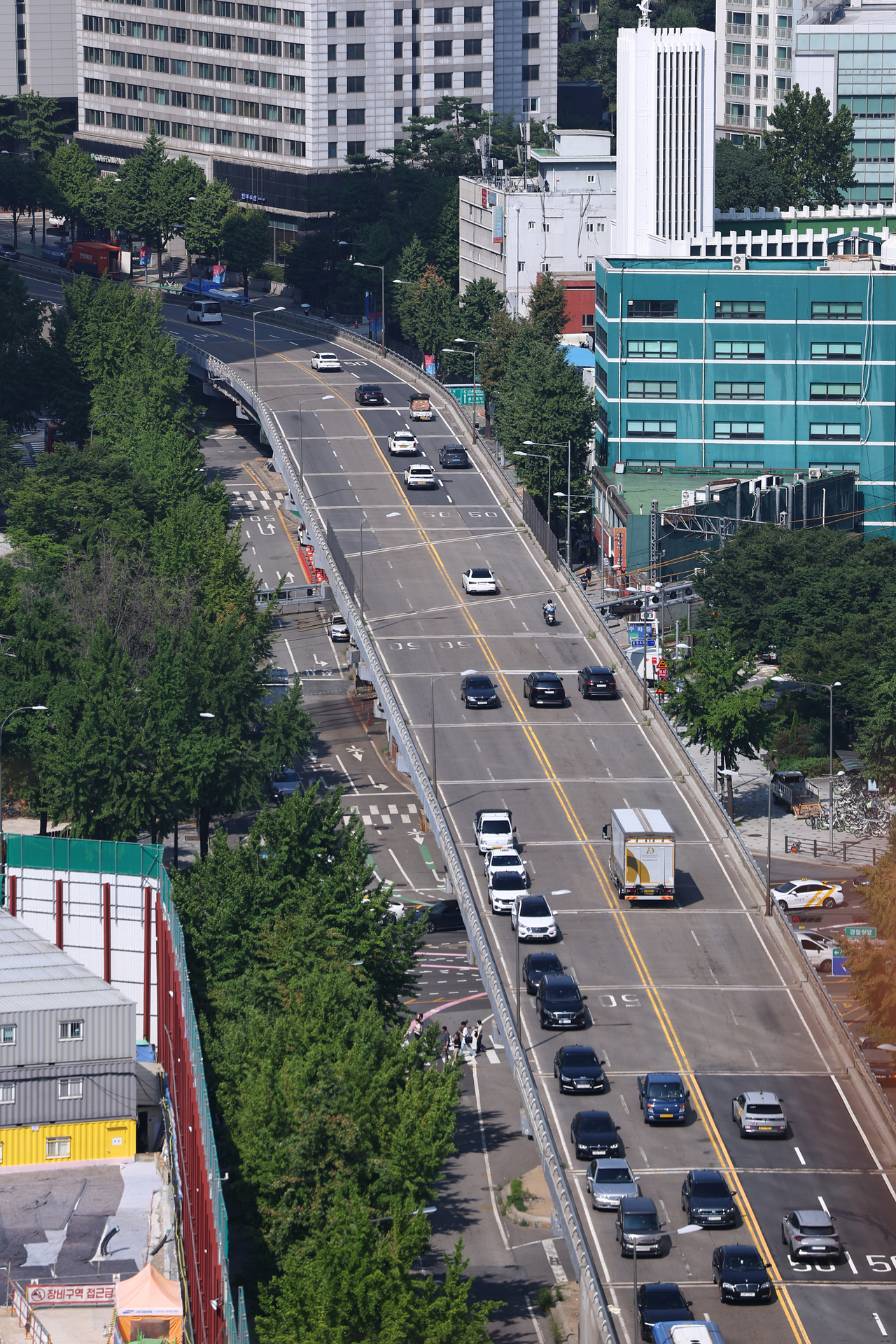
The Seosomun Overpass, once a driveway passing through the heart of Seoul, is slated for demolition over safety concerns.
The Seoul Metropolitan Government announced Tuesday that it is scheduled to remove the flyover, located in Seodaemun-gu, Seoul, by gradually closing its roads starting from Aug. 17.
According to the city government, one lane of the overpass connecting the City Hall and Chungjeongno Station of Line No. 2 will initially be closed. The opposite lane westward will subsequently be closed a week later on Aug. 24.
The overpass will be completely shut down on Sept. 21.
The city government added that construction of a new overpass will begin immediately after the original is demolished. The construction is scheduled to kick off in May 2026 and is expected to take approximately 20 months.
The 335-meter-long and 14.9-meter-wide road was used by more than 40,000 vehicles daily.
The city government determined that flyover demolition was necessary as maintenance efforts were no longer effective and public safety could not be guaranteed.
The Seosomun Overpass had multiple issues over the years, including concrete spalling and rebar corrosion in 2019, floor slab spalling in 2021, and concrete and reinforcing wire damage in the beams in 2024, due to overall concrete strength degradation.
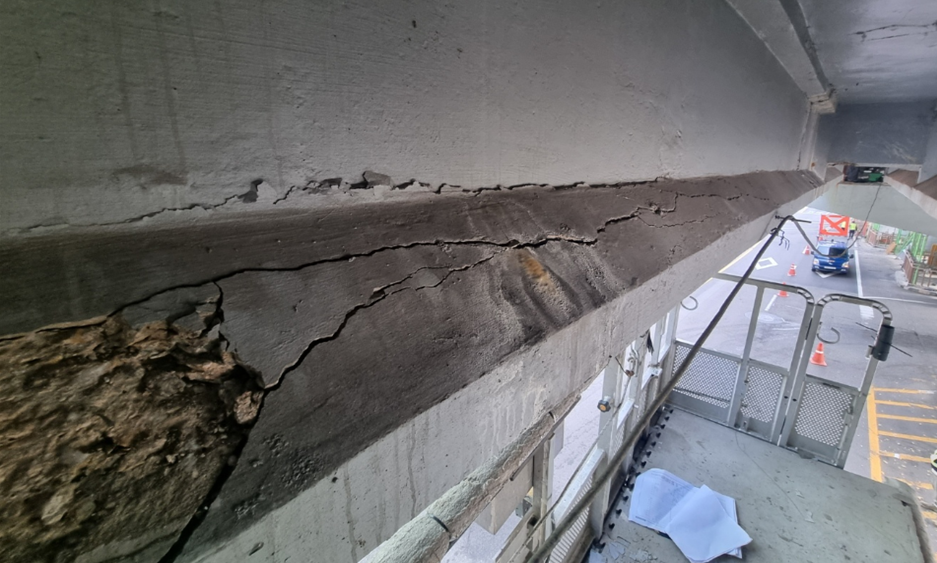
“The city has continuously worked on safety management by installing concrete falling prevention nets, repairing piers and restricting heavy vehicle traffic. But we determined that simple reinforcement measures were insufficient. Thus, the decision was made to take down the overpass,” the city government official said in a press release Tuesday.
With an estimated 10-month demolition period, the Seoul Metropolitan Government expects to complete the demolition process by May next year.
The city government asked for the public’s understanding as the traffic lanes are reduced from August to September.
Though the new bus routes have not been decided, the city government is attempting to turn 20 Incheon and Gyeonggi Province-based buses back before entering the city’s central area. And 23 Seoul buses are set to take a detour by driving toward nearby roads like Chungjeong-ro and Tongil-ro.
Drivers are asked to avoid using Seosomun-ro — the ground-level road beneath Seosomun Overpass — and take other routes, such as Sajik-ro, Saemunan-ro or Saejong-daero, as the street is expected to be congested with heavy traffic due to the reduced lanes.
Notifications will be made via the official website of the Seoul Metropolitan Government, on-site banners, posters, electronic traffic signs and social media channels.
Online guidance will also be provided through navigation systems and traffic applications.
sj_lee@heraldcorp.com